
These are Puglia’s most substantial show caves, with a genuinely memorable run of chambers rather than a quick roadside stop. Take the standard guided circuit early in the day, then use the rest of the day for Alberobello or the Valle d’Itria.
1.7h Timed entryBook the first tour of the day, especially in July and August.
Reserve a specific guided-tour departure in summer and on weekends; English-language times are more limited.
Pairs with: Alberobello Trulli · Cantina I Pàstini · Puglia Pop

Egnazia makes the Roman and Messapian layers of the Adriatic coast legible: excavated streets, tombs, museum pieces and a setting beside the sea. It is best for travelers who want a serious archaeological stop between the Valle d’Itria and coastal towns.
1.5h Walk upGo at opening or in the late afternoon, when exposed sections are cooler and quieter.
Tickets are normally easy to buy on arrival, though check seasonal opening hours before making a special trip.
Pairs with: Centro storico di Monopoli · Lama d’Antico Rupestrian Archaeological Park · Polignano a Mare Historic Centre

Monopoli is one of the most enjoyable working old towns on the Adriatic: white lanes, small fishing harbor, churches and a lived-in feel that avoids becoming a single-photo stop. Wander without a strict route, then stay through aperitivo or dinner rather than rushing on from Polignano.
2.5h FreeArrive by late afternoon and remain after day-trippers leave; summer mornings are also pleasantly quiet.
Pairs with: Polignano a Mare Historic Centre · Parco Archeologico di Egnazia · Lama d’Antico Rupestrian Archaeological Park

Alberobello’s concentrated trulli districts are the region’s unmistakable image, and even a first-time visitor should see them despite the crowds. Walk both Rione Monti and the quieter Aia Piccola, then leave the main souvenir lanes for a meal elsewhere in the Valle d’Itria.
2.5h FreeArrive before 9am or stay after 6pm; midday brings tour buses and day-trippers.
Pairs with: Grotte di Castellana · Cantina I Pàstini · Puglia Pop

The cliff-edge old town and views over Lama Monachile make Polignano one of Puglia’s essential Adriatic stops. It is visually compact, so pair a short walk and sea views with Monopoli rather than allotting an entire day unless you are swimming or dining here.
2h FreeGo early or around sunset; the central lanes and viewpoint become congested from late morning onward.
Pairs with: Centro storico di Monopoli · Parco Archeologico di Egnazia · Lama d’Antico Rupestrian Archaeological Park

Lecce is the essential urban counterweight to Puglia’s whitewashed coastal towns: its soft-stone Baroque facades, Roman amphitheater and evening street life reward unhurried wandering. Give it at least a late afternoon and night, rather than using it only as a lunch stop on the way to the coast.
3.5h FreeExplore major facades in late afternoon, then return after dark when the center is lively but less tour-group driven.
Pairs with: Torre Castiglione

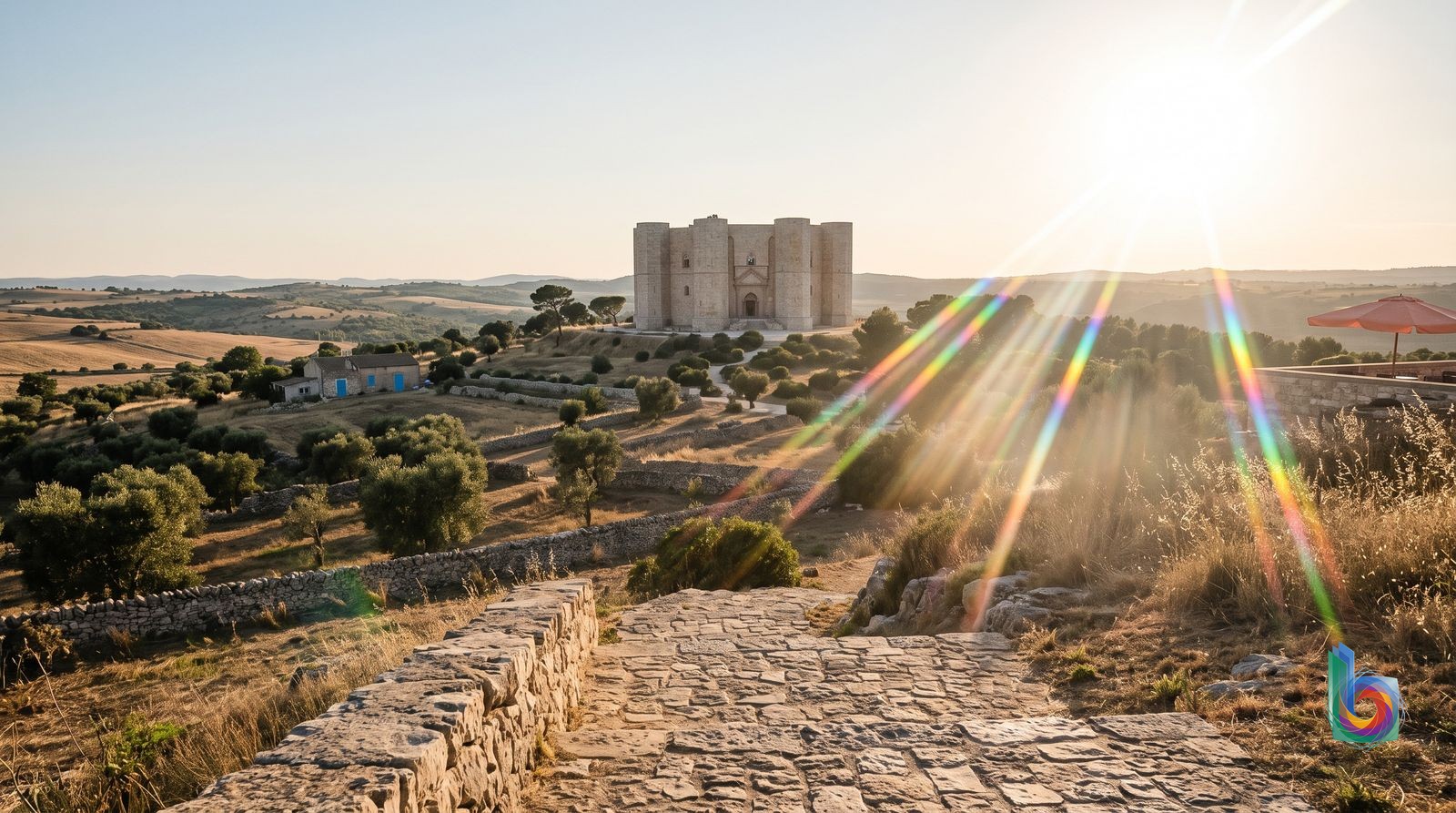
Frederick II’s enigmatic octagonal castle is Puglia’s great medieval monument and a World Heritage site whose isolated hilltop setting is part of the experience. Allow time for the drive and views; the interior is sparse, so visit for architecture and history rather than room-by-room displays.
1.3h Timed entryTake an opening or late-afternoon slot to avoid heat and the busiest coach groups.
Buy online for a preferred summer or weekend entry time; it generally does not require booking weeks ahead.
Pairs with: Gargano National Park

The Gargano supplies the landscape Puglia’s town-heavy itineraries can overlook: limestone headlands, forest, sea caves and small coastal settlements. It merits at least a full day—ideally more—and is best experienced with a car or an organized boat outing from the Vieste/Peschici area.
FreeStart early in summer for coastal roads, trailhead parking and boat trips; shoulder season is markedly calmer.
Pairs with: Castel del Monte

The rock-cut settlement and cave churches reveal a side of Puglia that the trulli-and-beach circuit can miss. It is a compact, atmospheric specialist stop, best combined with Egnazia or Fasano rather than treated as a full-day destination.
1h Walk upVisit in the morning or late afternoon; there is little shade in the hotter months.
Opening can be limited or seasonal, so verify hours before detouring here.
Pairs with: Parco Archeologico di Egnazia · Centro storico di Monopoli · Conservatorio botanico "I giardini di Pomona"

This is a modest coastal watchtower rather than a destination on the scale of Lecce or Otranto, but it gives a useful sense of the old defensive coastline. Treat it as a short photo-and-walk stop while exploring the Porto Cesareo/Torre Lapillo shore.
20m FreeCome near sunset, when the beach traffic thins and the light is better.
Pairs with: Lecce Historic Centre

This small botanical collection is an unusually thoughtful Valle d’Itria detour, especially for gardeners and anyone curious about Mediterranean fruit varieties. It works best as a calm pre-booked visit between the more obvious trulli towns and coastal sights.
1.3h Book aheadA morning appointment is coolest and leaves time for nearby towns.
Visits are commonly arranged by reservation rather than treated as an all-day walk-in garden.
Pairs with: Lama d’Antico Rupestrian Archaeological Park · Cantina I Pàstini · Alberobello Trulli

A tasting here is a useful introduction to the local white wines and the agricultural side of the Valle d’Itria. Go if wine is part of your trip, but do not substitute it for the region’s major historic and coastal sights.
1.3h Book aheadLate-morning tastings tend to be quieter than Saturday afternoons.
Book tastings in advance, particularly for English-language visits and harvest-season weekends.
Pairs with: Grotte di Castellana · Conservatorio botanico "I giardini di Pomona" · Alberobello Trulli

This is a local green-space diversion, useful for a shaded walk or family break amid the Valle d’Itria itinerary. It does not compete with Puglia’s signature historic towns, coast or archaeological sites, so use it only if you are already nearby.
1h FreeWeekday mornings are quietest.
Pairs with: Conservatorio botanico "I giardini di Pomona" · Cantina I Pàstini

A small civic collection can add local context to the surrounding historic landscape, but this is not a reason to reroute a first Puglia trip. Drop in only if you are already in town and want an indoor hour between meals or rain showers.
45m Walk upCrowds are rarely an issue; opening hours matter more.
Check same-day hours, as small municipal museums often keep limited opening schedules.
Pairs with: Conservatorio botanico "I giardini di Pomona" · Brigands Park

This aerial-adventure park is a worthwhile active diversion for families or travelers who want ropes courses, not a defining Puglia sight. It is most useful as a half-day add-on if you are already staying near Castellana Grotte.
2h Book aheadChoose an early weekday slot to avoid queues on the courses.
Reserve ahead for weekends, school holidays and larger groups; weather can affect operations.
Pairs with: Grotte di Castellana · Dinosaur Park | Castellana Grotte

This is a pleasant wine-focused stop for travelers looking to sample or buy regional bottles in the Valle d’Itria orbit. It is a niche add-on rather than a core cultural visit, so prioritize it only if food and wine are central to your itinerary.
1h Book aheadWeekday daytime appointments are usually the most relaxed.
Arrange a tasting ahead rather than assuming an organized visit will be available on arrival.
Pairs with: Grotte di Castellana · Alberobello Trulli · Cantina I Pàstini

This is a family-oriented dinosaur attraction, not part of the reason most first-time visitors come to Puglia. Consider it only as a child-focused break while based near Castellana Grotte.
1.3h Walk upVisit on a weekday morning if traveling with children.
Walk-up admission is usually practical outside holiday weekends.
Pairs with: Grotte di Castellana · IndianaPark Castellana Grotte